BATTERY STORAGE
Solar with or without a battery: what changes for your home?
Understand daytime self-consumption, evening demand, battery capacity and the separate requirements for backup power.
The short answer
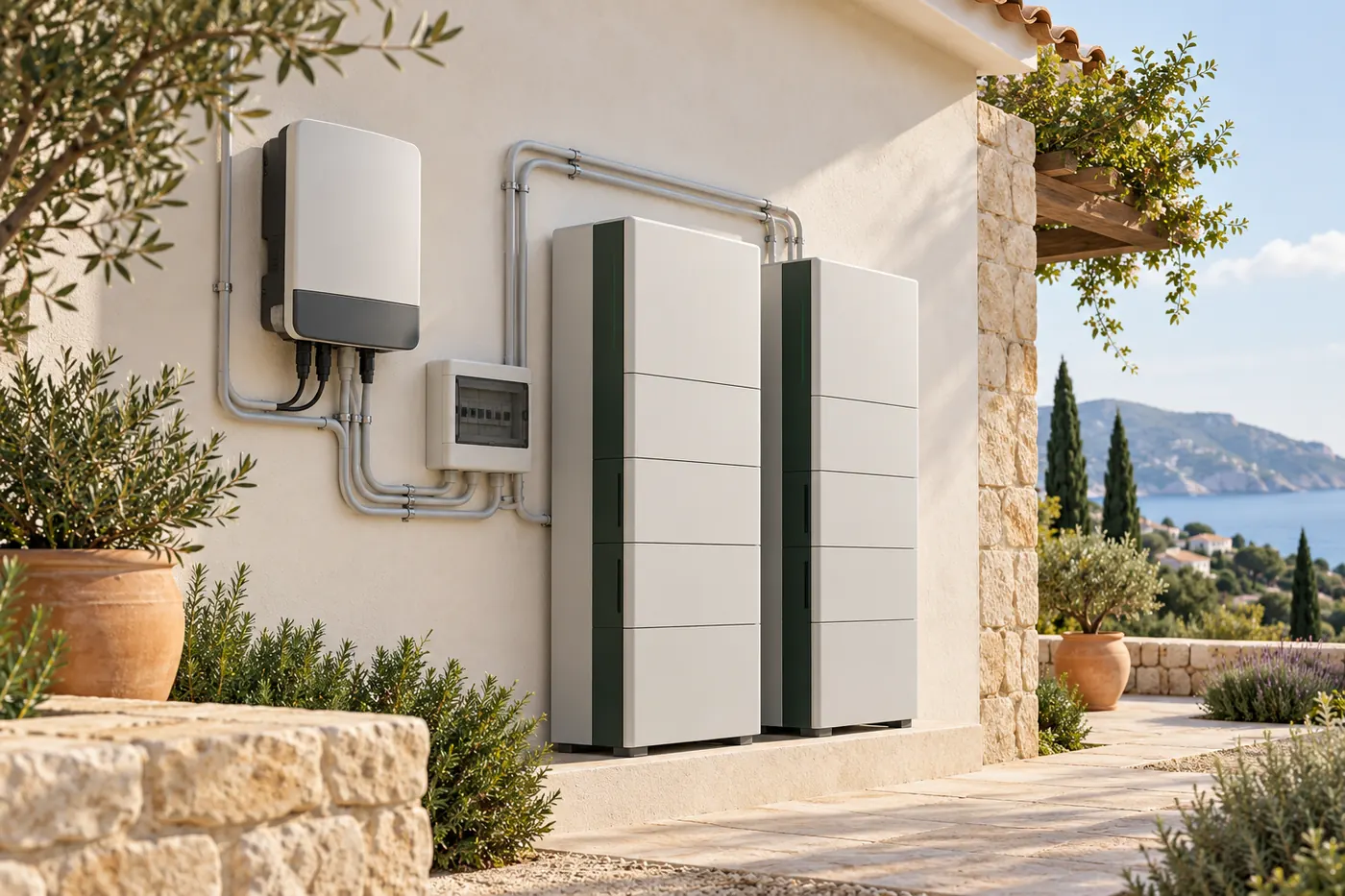
A battery can move surplus solar electricity from the daytime into the evening. Whether it is worthwhile depends on consumption timing, compatibility and extra cost. Having a battery does not automatically provide backup during a power cut.
Start with when you use electricity
A solar system produces during daylight. Your property may need electricity later, when generation has fallen. A battery can move some solar surplus into those hours. Its value depends on the surplus available to charge it, later loads and the cost of the complete configuration.
Capacity changes how much energy can be moved
Compare nominal capacity in kWh, usable capacity, charge and discharge power, inverter compatibility and the operating reserve. A larger battery cannot supply energy it never received. If 24 kWh already stores all useful surplus for the scenario, moving to 32 kWh may increase cost without increasing annual solar use.
What the calculator now models
Direct daytime use is separated from stored solar. For an average day of each month, the calculator limits storage by available surplus, remaining household demand and battery capacity. It assumes up to one cycle a day, 90% usable capacity and 90% round-trip efficiency. These are illustrative assumptions, not the specification of every battery. Storage losses are included in the energy balance. Home coverage is capped at 95% of monthly home demand.
The 10, 16, 24 and 32 kWh choices change the energy delivered to the house, imports, exports and financial results. The theoretical column instead values all generation at the purchase tariff. It is an energy-value comparison, not a promise that the same amount will be removed from your bills.
Compare imports and export credit separately
Solar used directly or later through storage avoids electricity purchases. Exported energy is a separate part of the calculation. The company scenario currently offsets matching import and export within each two-month bill at €0.25/kWh, and converts unmatched export into next-bill credit at €0.10/kWh. Confirm the applicable agreement for your property. No maintenance expenses are added in this calculator.
Backup is a design requirement
A battery does not automatically keep every circuit running during a grid outage. Agree the supported loads, inverter output, changeover arrangement and reserve. Evening use and outage autonomy can lead to different storage choices.
What to send for a useful comparison
- Your last six two-month bills and daytime/evening use.
- The inverter and battery models, if already installed.
- The loads you want to keep running in an outage.
- Plans for cooling, a pool, an EV or future expansion.
Check an existing system or compare a new-system scenario. A tailored proposal should identify equipment, usable capacity, work scope and the assumptions behind its results.
Sources and further reading
Check programme status and property-specific terms in the linked official sources before making a decision.
Keep exploring
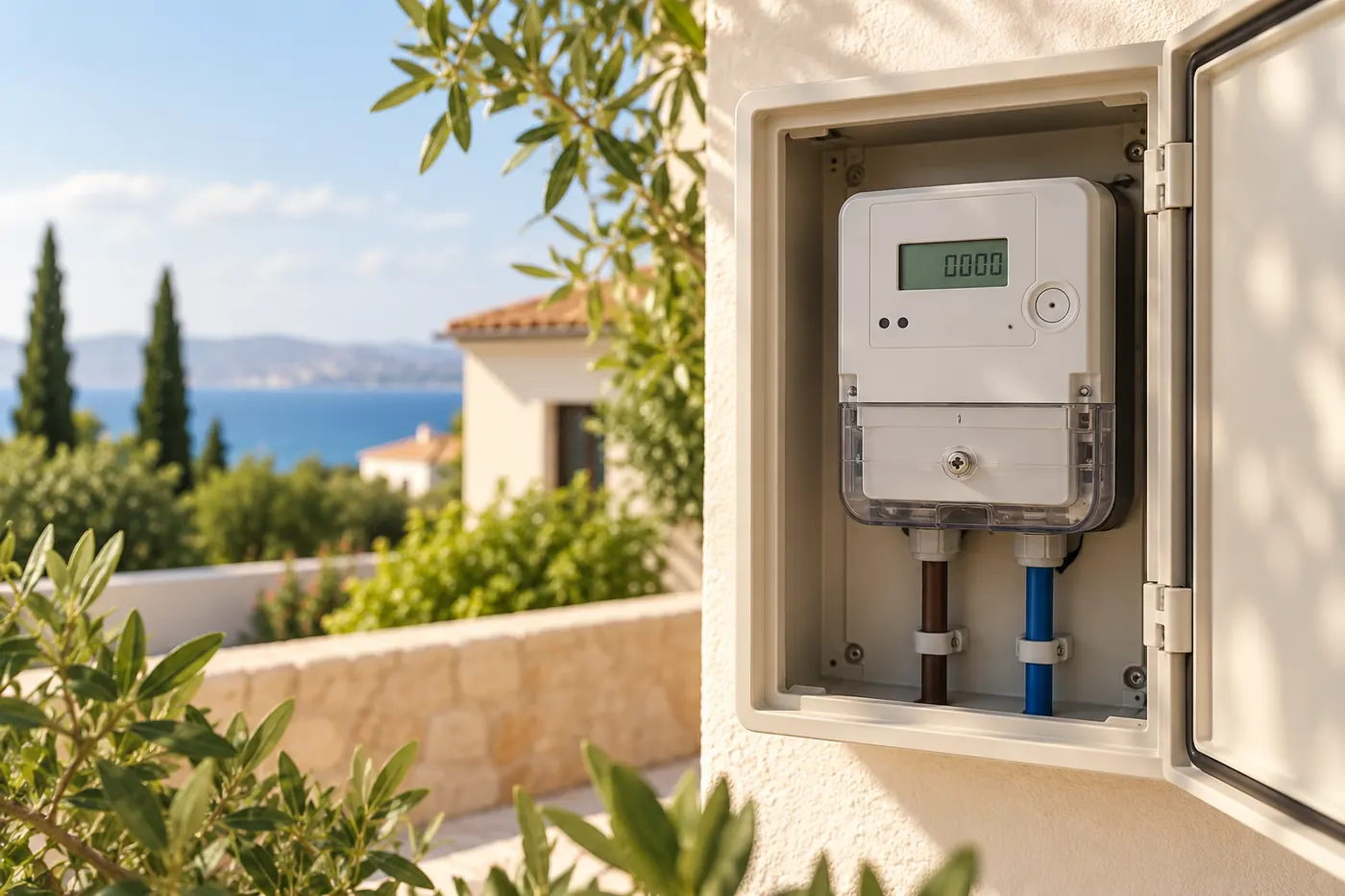
Reading your EAC smart meter when you have solar and storage
Understand import, export and solar production: which readings to record and how to compare an EAC smart meter with your inverter and battery app.
Read the guide
Will the panels fit? Roof space and module size explained
Panel watts, physical dimensions and usable roof area are different. Learn what a useful Cyprus roof layout should show before you compare proposals.
Read the guide
Solar at another property: what to check before virtual bill offsetting
Understand the idea of virtual solar credits and the contract, connection and site checks needed before assuming a remote system can offset your Cyprus bill.
Read the guide