OFF-GRID / INDEPENDENT OF THE GRID
Off-grid solar.
Your own independent power.
An off-grid system starts with your loads and the time they need to operate. Match panels, an inverter and storage to the way you will use the property.
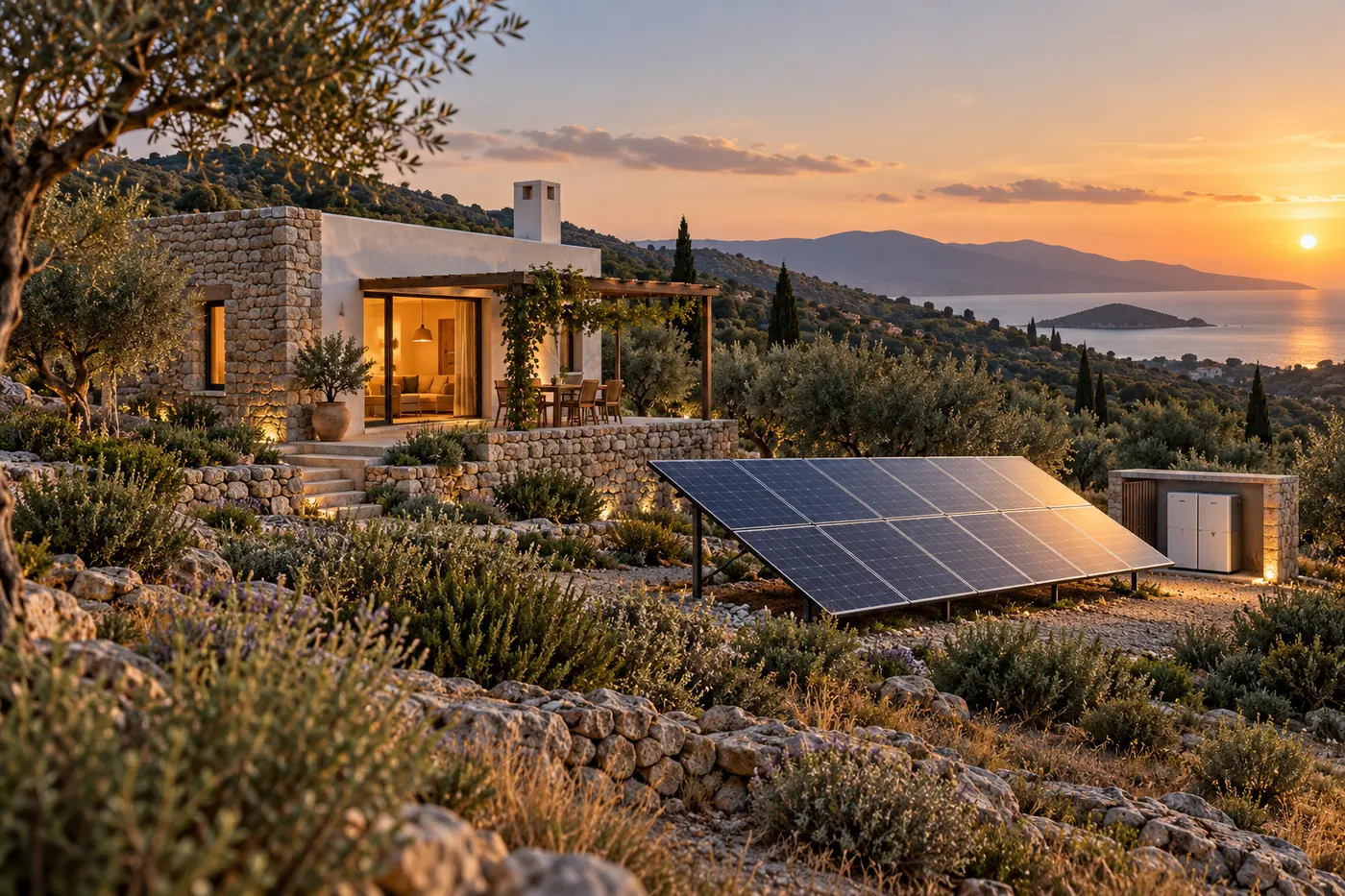
Build the reserve around the loads.
Autonomy is a balance between demand, generation and usable storage. Agree the equipment that must operate and the period without reliable sunshine.
Annual generation alone does not establish off-grid reliability.
Off-grid operation has no external grid to cover a shortfall. Design must consider peak power, stored energy and low-generation periods, as well as annual production.
For a place
without grid support.
A home or separate property
Assess permanent and seasonal loads, occupancy, cooling and the energy needed through the evening and night.
Specific equipment or circuits
Pumps, equipment or selected loads. Check operating schedules, starting currents and whether use can shift to sunny hours.
THE CONFIGURATION
Power. Energy.
Time to keep running.
Models, quantities and included work are recorded in your property proposal.
- 01
Load profile
Daily kWh, simultaneous power in kW, starting loads and seasonal use.
- 02
Solar array
Layout and generation assumptions, with attention to the most demanding operating period.
- 03
Inverter and battery
Power limits, usable storage capacity and the autonomy you require.
- 04
Energy reserve management
Circuit priorities, the battery reserve and an additional supply source if needed.
Annual generation
is only part of the design.
What happens on cloudy days?
Agree an energy reserve, acceptable load reductions and any additional supply needed. Shorter solar days are considered in the design.
What must stay on?
Separate essential and flexible loads. A larger battery cannot solve a shortage of generation to recharge it.
FROM YOUR GOAL TO HANDOVER
A clear next step.
Loads and operating schedule
Collect appliance power ratings, operating hours and autonomy requirements.
Energy balance and configuration
Match generation, storage, peak loads and possible backup supply.
Installation and setup
Check agreed loads, charging modes and management of the energy reserve.
COST & PREPARATION
Size around your loads.
Not an average bill.
Continuous and peak loads, autonomy, difficult-season generation, storage and backup design determine cost. The grid-connected savings calculator does not assess off-grid reliability; a separate design is needed.
What to prepare for a proposal
- Appliance list with power and operating hours
- Which loads run at the same time
- Required hours or days of autonomy
- Installation location, seasonal use and available backup sources
FAQ
Questions before
your decision.
How is off-grid different from a hybrid system?
An off-grid design cannot rely on the external grid. A hybrid system may combine grid connection, storage and selected backup. The actual equipment modes and electrical design are specified for the project.
How is battery capacity selected?
From demand during periods without generation, permitted discharge, losses and the reserve required. Nominal battery kWh are not the same as energy available in every situation.
Does enough annual generation guarantee autonomy?
No. Load profiles, seasonal generation and low-production scenarios are needed. A summer surplus cannot provide winter power without the appropriate storage and backup arrangements.
Will I need a generator?
It depends on loads and the required availability of power. The design compares an additional source, increased reserves and load management; the answer is not the same for every property.
Can an off-grid system run cooling or a pump?
It can with suitable inverter power, starting-current capability, generation and storage. The equipment specifications and operating schedule are needed to assess this.
Start with your appliance list.
Tell us what must run, for how long and at what time of year. That gives us the basis for an off-grid configuration.